
Likable/Unlikable Characters
Reading "By Nightfall" by Michael Cunningham

Michael Cunningham has a thing for beautiful gay young men who can’t quite seem to find their place in life. In his novel “Day,” (2023), the young man was Robbie, who was living in the attic of a home owned by his sister, Isabel, and her husband Dan.
Robbie created an avatar of himself named Wolfe and basically lived an online life until he decided to move to Iceland, where tragedy struck.
This week I read “By Nightfall,” written earlier by Cunningham in 2010. “By Nightfall” too had a couple where the brother of the wife had come to stay with them, having decided that his quest for spiritual enlightenment at the foot of a guru in Japan was not actually what he was looking for.
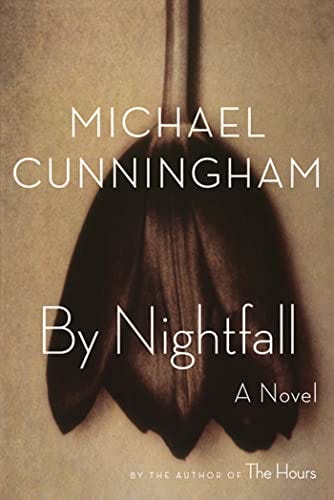
The young man is called Mizzy, which stands for mistake, a moniker given him when he came along after everyone thought his parents were done having children. There’s something about the youngest child that can create dependency, and Mizzy seems to have fallen into this trope. Too cute, too glib, and easily forgiven.
The husband of the family, Peter, owns an art gallery, and the novel is a fascinating look at the world of art-- who is current, who is not, how art gets sold and the world of consumers of art, generally wealthy people who are looking to impress other people with their purchases. I found this part of the novel to be fascinating, as I always love a novel where there’s something to be learned. The combination of the personalities of artists with the personalities of art buyers made it an unappealing prospect for a stable, successful enterprise.

Praewthida K on unsplash.com
Mizzy, as it turns out, is a drug addict, which Peter discovers when a drug dealer delivers drugs to their home. Mizzy may or may not be gay, but he attracts something in Peter that surprises, shocks, and ultimately seduces Peter. Peter questions his marriage, whether his career has been a success, and what if anything he is supposed to do with a young man who shows up in his kitchen when they both have insomnia stark naked.
Mizzy is a manipulator, as are most drug addicts. He manipulates Peter into keeping his addiction from his sister, fearing another intervention and treatment center. Peter, enthralled by the attention of Mizzy, doesn’t see this until it is too late.
And although there are certainly some shocking plot points in this novel, they are almost ancillary to the overall theme, which is Peter‘s evaluation of his life. In particular, he wonders whether he is a success or simply a peddler of whatever appeals to the art market. He wonders whether his estrangement from his adult daughter, living in Boston and working in a bar, is truly the result of poor parenting on his part. She says he neglected her when she was young. He doesn’t even seem to remember this. I felt that the novel shirked delving into this estrangement and Peter’s attempts to connect with his daughter (a telephone call is awkward and sad.) Is Bea, like Mizzy, coming to terms with not being as smart or special as she had hoped?
Having now read multiple reviews of “By Nightfall,” I conclude that the reviews fall into three camps.
First, there are those who feel that Peter is an entitled white upper middle class unlikable character and they’re not interested in what he thinks or what he does.
Next, there are those who are captivated by Cunningham‘s writing and savor his style.
Third, there are those who feel that the novel is pretentious because of the extent to which Cunningham drops references to literature, ranging from “Ulysses” to “The Magic Mountain” to “The Great Gatsby.” (and more, much more.)
The reviewer for “The Guardian” was appalled and felt that the novel was both pretentious and a failure because of all of its literary allusions. I enjoyed the literary allusions (maybe I’m pretentious too?). It’s a feature of many of my favorite novels, including “The Friend,” by Sigrid Nunez, who sprinkled imaginary conversations with literary personalities throughout the novel, which I found intriguing.
I doubt Cunningham felt that he needed to demonstrate his literary chops, having won the Pulitzer Prize for his novel, “The Hours,” (1998) inspired by “Mrs. Dalloway,” by Virginia Wolfe. Maybe he just had fun riffing on them. As to whether Peter is likable or unlikable, I was neutral. Was Harold Bloom likable in “Ulysses?” (also cited).
There’s an argument that if we are truly privy to what’s in another person’s mind, none of us would probably be that likable. I didn’t feel that Peter was whiny (one of the reader complaints.) Obviously, he’s well to do and owns a loft in Soho, but his art gallery is not a thriving success, and he’s reduced to peddling a brass urn to a rich client that while outwardly beautiful is inscribed with sexual innuendos and swear words. So, is that art? What’s the purpose of art, anyway? To shock? To generate conversation? To advertise one’s wealth? I could see Peter ruminating on these questions.
Ultimately, however, putting aside the issue of the literary illusions and whether Peter is likable or unlikable, I found Cunningham’s writing style to be captivating. Janet Fitch, the reviewer for the LABR felt the same way.
“Beyond the drama though, the book’s real achievement lies in its portrayal of Peter‘s multilayered contradictory consciousness. I didn’t so much read this book as press it to my nose and mouth like an oxygen mask. Its prismatic interiority is exactly what I needed – a reminder that the airless feedback loop of our social networks and beehive like interactivity is a thin substitute for the kind of mental life Cunningham depicts so richly – the private life of the adult mind.
I think it’s fascinating that this novel has created both ardent fans and foes. Maybe this is a good thing. Maybe an author everybody loves like Elizabeth Strout or Richard Russo could take it up a notch a bit and create some controversy.
Like Fitch, I found much of the writing irresistible. Here is a description of the Taylor family (Rebecca and Mizzy’s) that Peter married into:
Rebecca‘s family is in a way a country unto itself. Peter married into it as he might have married the customs and legends, the peculiar history of a girl from a small, remote nation. The Taylor family nation would be solvent, but not wealthy devoted to regional dishes and handicrafts lax about timetables and train schedules, tucked into the declivities of a mountain range, daunting enough to have protected it from invaders, immigrants, and most ideas and inventions it did not itself engender. Mizzy would be its wounded patron saint, whose pale glass-eyed effigy is paraded annually through the streets and into the central square.
I ultimately conclude whichever camp you agree with, even if you think Peter is entitled and Cunningham drops too many literary figures into the stew, you will be captivated by the writing style. Plus—great ending!
Well, you've whetted my appetite for Michael Cunningham! It's true that a likable character is not a reliable criterion for the novel's success. I think of Gustav von Aschenbach in Death in Venice. Didn't love the guy, but Thomas Mann's superb craft was such that we could enter the character's mind, and feel entirely at home exploring his thoughts and his richly-manifested world.
What an in depth discussion--Christine does not include any personal references which is a departure from her normal style. I miss those but found this very insightful. Vivian Shipley