
How Did She Do That?
Reading about the exploits of remarkable women.

Those who know me well know that back in the day, there were two professional women whose jobs I wanted. One was Jane Pauley, who hosted the morning news on television, and the other was Anna Quindlen, who at the time wrote a regular newspaper column called “Living Out Loud.” I made my peace with TV news, in part because my daughter became a reporter and I got to see the challenge of coming up with a 90 second story every day. In addition, Jane Pauley had to get up at 4 o’clock in the morning at her home in Connecticut to get herself to the Manhattan studio, never seeing her children at the breakfast table. Once I had children of my own, that seemed like too much of a sacrifice.
I’ve loved Quindlen’s fiction and nonfiction. When I gave myself a weekly deadline almost three years ago to write on Substack, it was Anna Quindlen’s weekly columns I was thinking of.
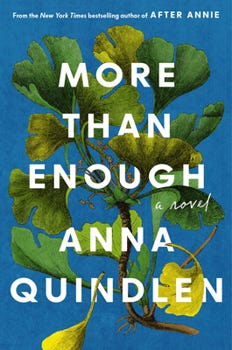
I’m now reading “More Than Enough” by Anna Quindlen and although I haven’t finished it, I want to talk about the book group to which Polly, the main character, belongs. In this book group, they buy the book, they bring the book to the book group meeting, but they do not actually read or discuss the book. They feel they’re doing their job of supporting authors by purchasing the books, but they don’t want to talk about them. More about this novel soon.
My book group, on the other hand, is very serious about the books we choose. Each member on a rotating schedule presents two possibilities and then we vote on which one we want to read. Then the sponsor of the book researches the author of the book, the backstory of the book, etc., and does a presentation before we discuss the book itself.
As sponsor, I tend to make a list of questions. In part this avoids the “I have a cat phenomenon,” a term coined by a fellow teacher at the University of Hartford to explain the phenomenon that when students read a novel with a cat in it, they want to discuss their own personal cat. My book group knows that I am famous for saying “let’s get back to the book,” when I feel that the conversation has strayed into areas that don’t have anything to do with the book. This week, we are discussing “No Two Persons” by Erica Baurmeister. I’m the presenter, so I’d better get cracking.
Anyway, I started thinking about my book group because I read an article this morning in The New York Times Book Review about a new book about the Lewis and Clark expedition, called “Into the West,” by Andrea Wulf, which introduces many of the ancillary characters who took part in the expedition, including, of course, Sacagawea. I had never heard of Sacagawea until I joined a book group. Not only was she a guide, but she also helped to make peace with Indian tribes they met in their journey. In Clark’s words, Sacagawea “reconciles all the Indians as to our friendly intentions. A woman with a party of men is a token of peace.” Historians have reclaimed her role as much more than a friendly face.
And that led me to think about all the other powerful women I have learned about from books that we have read in our book group. The first is Olga Ivinskaya, who was the mistress of Boris Pasternak, the author of Dr. Zhivago. The book “Lara” was written by Anna Pasternak, a grandniece of Boris Pasternak.
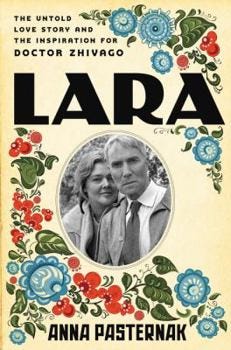
Her stated goal was to reclaim the Pasternak family’s image of Ivinskaya as a seductress or a homewrecker into a woman who supported Pasternak’s work and was persecuted for her connection with him-- to the point of being sent to the Gulag because she would not testify against him. According to the author, Olga was a model for the character of Lara in Dr. Zhivago. (hence the title) In order to discuss this argument, I both read Dr. Zhivago and watched the film.
Lara did not seem to me to be similar to Olga at all. First of all, the love affair between Lara and Yuri in Dr. Zhivago was relatively short-lived. It was not the major theme or plot point of the novel, whereas Olga was the mistress of Boris Pasternak for many years. She began as an editor and ended up as a first reader and collaborator, even writing letters for him to the Russian authorities. Second, Lara was never persecuted for her connection with Yuri, who was apolitical. I couldn’t have made these points to refute Anna Pasternak’s view without having done my research.
My book group also read “The Empress of the Nile,” about a French woman named Christine Desroches-Noblecourt, who curated the Egyptian collection at the Louvre during World War II and eventually became an archaeologist excavating important sites in Egypt.
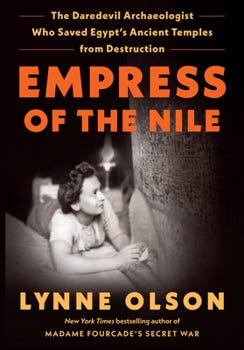
She is credited with the successful effort to save Abu Simbel from flooding by the Aswan Dam by organizing fund raising and a massive feat of carving up the massive sculpture and moving it. Christine charmed politicians, managed to get funding for the rescue effort, and became beloved of the workers whom she treated as real people. And we had never heard of her!
We read a number of books about the Irish troubles, which was not news to me, but the book “The Woman Who Stole Vermeer,” by Anthony Amore, introduced me to Rose Dugdale, who, although she was British, wanted to be accepted as a freedom fighter by the IRA,. The IRA decided she was somewhat unhinged and disavowed her but that didn’t stop Dugdale from daring exploits to free Irish prisoners.
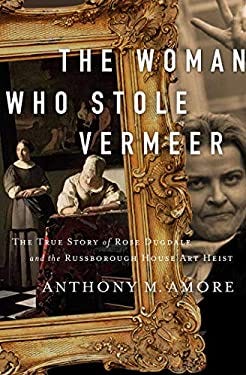
We learned from one member of our book group who had lived in London in the 70s that Rose Dugdale was involved with terrorism on the homefront in England, including setting bombs at railway stations. We didn’t like Rose, but admired her ability to engineer an art theft of major proportions.
Finally, I just finished listening to “Undersong,” by Kathleen Winter, historical fiction about Dorothy Wordsworth, William Wordsworth’s ‘s sister. It’s told mostly through the point of view of James Dixon, a handyman hired by William to both take care of the gardens and oversee his sister, who William said could be mentally unbalanced. Winter in an interview said that Dixon was a real character who worked for the Wordsworths, although no one knows what he thought or felt.
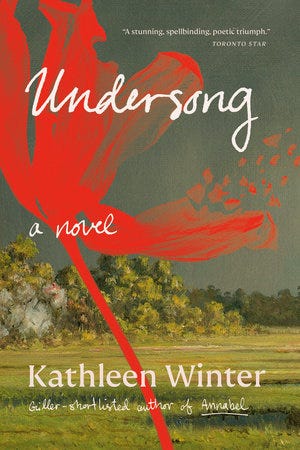
In the novel, William asks Dixon to secretly read and decode Dorothy’s journals for any lines or phrases he might use in his poetry. (In fact, Dorothy did offer observations for her brother’s use.) Dixon in the novel is sensitive to the natural world, which was important to Dorothy Wordsworth, and is tender and solicitous towards her care, including taking her outside in a cart he made for her when her legs failed. He yearns to be acknowledged by her, but says he is only a “servant.” He searches her journals hoping to find his name.
The novel is told in three voices. The first voice is a sycamore tree in the garden where the Wordsworths live. (This reminded me of Elif Shafak’s novel, “The Island of Missing Trees,” where a fig tree is a character in the plot. It’s not as weird as it sounds.) The major voice is Dixon’s. Then, at the very end of the book, we hear Dorothy Wordsworth‘s words from her “red journal,” which was of no interest to her brother, who dismissed it as holding only Dorothy’s feelings.
After a lively childhood as an equal with William and Sam Coleridge, Dorothy becomes relegated to being a “woman,” which she resents. She believes she has talent but recognizes that the world of literature is reserved for men. She acknowledges she has “suppressed rage.” Dorothy’s desire to be acknowledged mirrors that of Dixon’s.
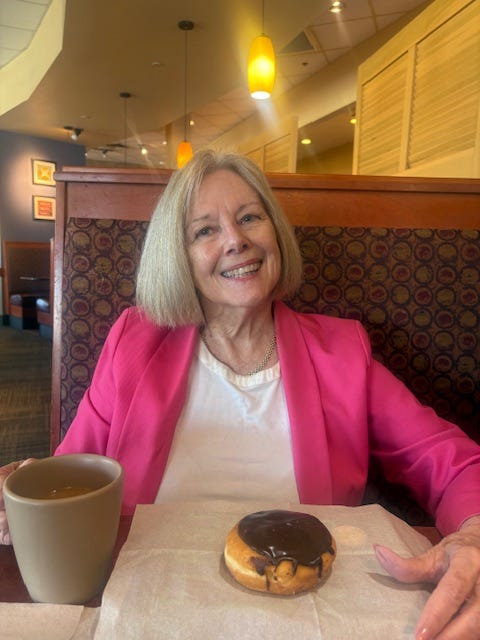
Such a human desire, to be acknowledged. Like my friend Dianne did last week when an elderly woman I’d been helping for years died. She thanked me, asked me what she could get me. Then she brought me what I asked for--a donut!
BTW, great way to run a book club, imo. Really respects the effort authors put in. I’ve only belonged to one and left because it quickly degenerated into OB GY comps.
I’m having a Sacajawea/gawea week. I keep being told that a close comp for my latest novel is ‘The Lost Journal of Sacajawea’ ( sic)- Debra Magpie Earling. I dipped into it and see why. Indigenous woman’s critique of colonisers - ditto, my ‘Daughter of the Kalahari’. I find the voice in Earling’s novel spellbinding. Now, I’m intrigued by this expedition. It was not taught in my part of the globe. Which account of it should I read first?